Farm Labor
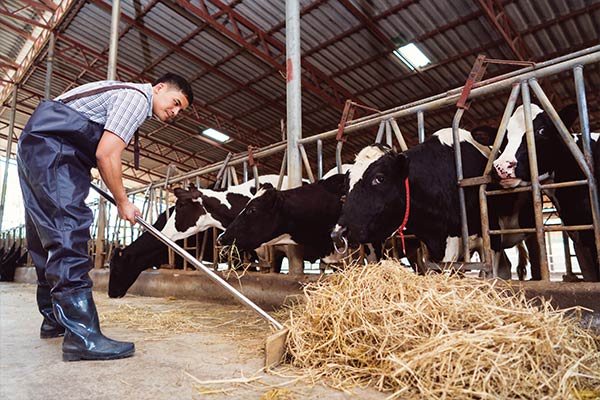
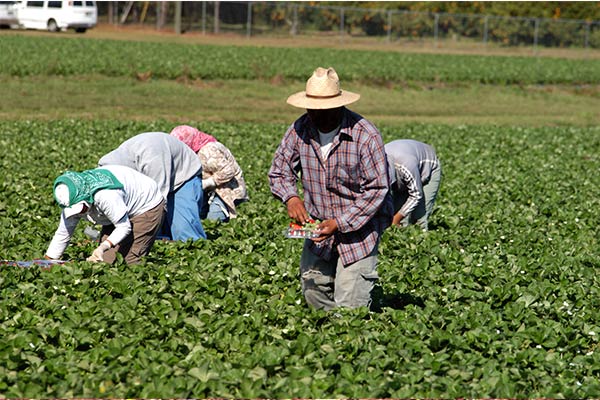
According to the 2022 University of Connecticut’s College of Agriculture and Natural Resources report, “Economic Impacts of Connecticut’s Agricultural Industry,” Connecticut agriculture generates up to 31,000 jobs statewide. Productive employees help grow farms and farm businesses.
As a farm owner and employer it is important to keep current with the federal and state labor laws that protect workers and your business operations. Farm Bureau is here to help you with key questions, but you should start by knowing the laws that govern employers.


Informational Resources
Below are resources and information on Connecticut and Federal Labor Laws for Connecticut farm business owners and employees.
The U.S. Department of Labor, Wage and Hour Division is responsible for administering a number of statutes that extend various protections to different types of agricultural workers. The coverage and requirements of these statutes may overlap. Since the interplay between the laws can be complex, please contact the nearest Wage and Hour District office with specific questions.
In addition to the resources provided, you are encouraged to visit the U.S. Dept. of Labor, Wage and Hour Division website for additional information relative to your farm labor situation and for updated information.
- U.S. Department of Labor, Wage and Hour Division
- Basic Information
- Wage and Hour Division Agricultural Employment
Hartford Connecticut District Office
US Department of Labor
Wage & Hour Division
Hartford, CT 06103-1111
1-866-487-9243
New Haven Connecticut Area Office
US Department of Labor
Wage & Hour Division
150 Court Street
New Haven, CT 06510
1-866-487-9243
For more detailed information and guidance, please call the office directly: 860-768-1100.
Fair Labor Standards Act (FLSA) contains federal minimum wage, overtime, recordkeeping, and child labor requirements for covered agricultural employers.
- Agricultural Employers Under the Fair Labor Standards Act (FLSA)
- Coverage Under the FLSA
- Employment Relationship
- Fair Labor Standards Act (Full version)
- FLSA Agricultural Employees Poster
- FLSA Recordkeeping Requirements Fact Sheet
- Handy Reference Guide to the Fair Labor Standards Act
- Hours Worked Under the FLSA
The Migrant and Seasonal Agricultural Workers Protection Act (MSPA) protects migrant and seasonal agricultural workers by establishing employment standards related to wages, housing, transportation, disclosures and recordkeeping. The MSPA also requires farm labor contractors (FLCs) and farm labor contractor employees (FLCES) to register with the U.S. Department of Labor and to obtain special authorization before housing, transporting, or driving covered workers.
- For farm labor certificate registration, general guidance, fact sheets, forms, posters and applicable laws and regulations pertaining to MSPA visit this website.
- The Migrant and Seasonal Agricultural Worker Protection Act (MSPA)
The H-2A visa program establishes standards related to recruitment, wages, housing, transportation, and recordkeeping for employers of temporary non-immigrant agricultural workers admitted to the country under section 218 of the Immigration and Nationality Act.
For an overview, key news, general guidance, fact sheets, posters, presentations and applicable laws and regulations pertaining to the H-2A visa program click here.
The Occupational Health and Safety Administration is part of the U.S. Department of Labor. The role of OSHA is to assure safe and healthful working conditions for working men and women by setting and enforcing standards and by providing training, outreach, education and assistance. Learn more here.
Regional OSHA office (CT, RI, MA, ME, NH and VT)
JFK Federal Building
25 New Sudbury Street, Room E340
Boston, Massachusetts 02203
617-565-9860
Field Sanitation Provisions of the Occupational Safety and Health Act (OSHA) establish minimum standards for covered agricultural settings for toilets, potable drinking water, hand-washing facilities, and for providing information regarding good hygiene practices.
- Fact Sheet #51: Field Sanitation Standards under the Occupational Safety and Health Act
- For an overview, general guidance, fact sheets, opinion letters and interpretive guidance and applicable laws and regulations pertaining to field sanitation provisions of OSHA, click here.
The federal child labor provisions, authorized by the Fair Labor Standards Act (FLSA) of 1938, also known as the child labor laws, were enacted to ensure that when young people work, the work is safe and does not jeopardize their health, well-being or educational opportunities. These provisions also provide limited exemptions.
For an Overview, General Guidance, Fact Sheets, e-Tools, Publications, Interpretative Guidance, Applicable Laws and Regulations, Rulemaking Resources, Presentations and Child Labor CMP Assessment Amounts pertaining to child labor, click here.
The U.S. Environmental Protection Agency (EPA)’s current Agricultural Worker Protection Standard (WPS) is a regulation published in 1992 that is aimed at reducing the risk of pesticide poisoning and injury among agricultural workers and pesticide handlers. The current WPS offers occupational protections to over 2 million agricultural workers (people involved in the production of agricultural plants) and pesticide handlers (people who mix, load, or apply crop pesticides) that work at over 600,000 agricultural establishments (farms, forests, nurseries and greenhouses).
The WPS requires that owners and employers on agricultural establishments provide protections to workers and handlers from potential pesticide exposure, train them about pesticide safety, and provide mitigations in case exposures may occur.
Connecticut Department of Labor
200 Folly Brook Boulevard
Wethersfield, CT 06109
Phone: (860) 263-6000
dol.webhelp@ct.gov
The Wage and Workplace Standards Division has jurisdiction over the laws and regulations in employer-employee relationships covering 1.6 million workers and 97,000 employers in Connecticut. Among these laws are minimum wage, overtime, wage payment, prevailing wage, and employment of minors.
The Workers’ Compensation Commission (WCC) administers the workers’ compensation laws of the State of Connecticut with the ultimate goal of ensuring that workers injured on the job receive prompt payment of lost work time benefits and attendant medical expenses. To this end, the Commission facilitates voluntary agreements, adjudicates disputes, makes findings and awards, hears and rules on appeals, and closes out cases through full and final stipulated settlements.